Election Types
The Six Ballot Papers: Understanding the Roles of Your Elected Leaders
2024-11-3012 min Read time1,250 Reads
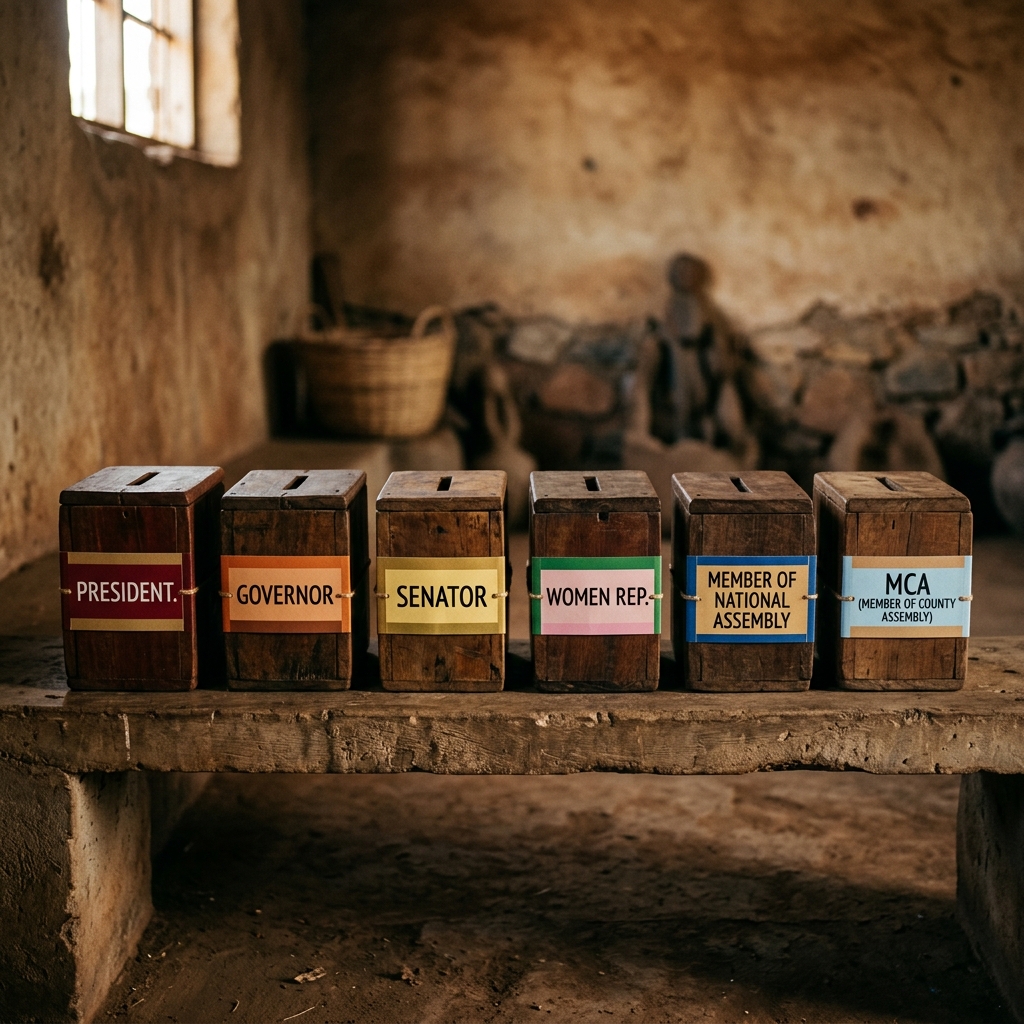
When you walk into a polling station, you get 6 ballots. This guide explains the specific constitutional duties of each office.
THE COMPLEXITY OF A DEVOLVED DEMOCRACY
Since the implementation of the 2010 Constitution, Kenya has operated as a devolved democracy. This means power is shared between the National Government in Nairobi and the 47 County Governments across the country. On election day, this leads to a process that can be confusing: you are handed six different ballot papers (usually color-coded) and must cast six different votes. Understanding 'who does what' is essential for holding the right people accountable for the right problems.
1. THE PRESIDENT (NATIONAL EXECUTIVE)
The President is both the Head of State and Head of Government. Their role is to implement national law, manage the military (as Commander-in-Chief), and set the overall national budget. If the national economy is struggling or if there are issues with international trade, your target of accountability is the President.
2. THE GOVERNOR (COUNTY EXECUTIVE)
The Governor is the chief executive of your county. They manage the county budget and are responsible for 'devolved functions'. If your local hospital has no medicine, if the garbage is not being collected, or if local markets are in disrepair, the Governor is the official responsible.
3. THE SENATOR (NATIONAL LEGISLATIVE)
The Senator does not build hospitals or roads. Their specific role is to represent the interests of their county at the national level. They help determine how much revenue goes to the counties and they provide oversight to ensure the Governors are spending that money correctly.
4. THE MEMBER OF THE NATIONAL ASSEMBLY - MP (NATIONAL LEGISLATIVE)
Your MP sits in the National Assembly. Their primary duty is to legislate on national matters and manage the NG-CDF (National Government Constituency Development Fund). This fund is used for things like building classrooms in local schools and secondary security infrastructure (like police posts).
5. THE COUNTY WOMAN REPRESENTATIVE (NATIONAL LEGISLATIVE)
A common misconception is that Woman Reps only deal with women's issues. In reality, they are regular MPs but their constituency is the entire county. They have a specific fund (NGAAF) focused on affirmative action projects for youth, women, and marginalized groups.
6. THE MEMBER OF COUNTY ASSEMBLY - MCA (COUNTY LEGISLATIVE)
This is your most immediate representative. They sit in the County Assembly and their job is to make local laws and oversee the Governor. If you have a problem with a local road or a ward-level project, your MCA should be your first point of contact.
By understanding these roles, you avoid the trap of blaming the President for a village health clinic issue, or blaming an MCA for a national taxation policy. Each ballot paper is a different tool for a different task.